
The argument over AI’s energy appetite has settled on a single question — where do we put the gigawatts?
The debate about AI and energy generally involves a campus, a substation, an interconnection queue, and a number with nine zeros after it. Utilities are modeling it, regulators are litigating it, and developers are optioning land next to power generation because that is faster than waiting for transmission.
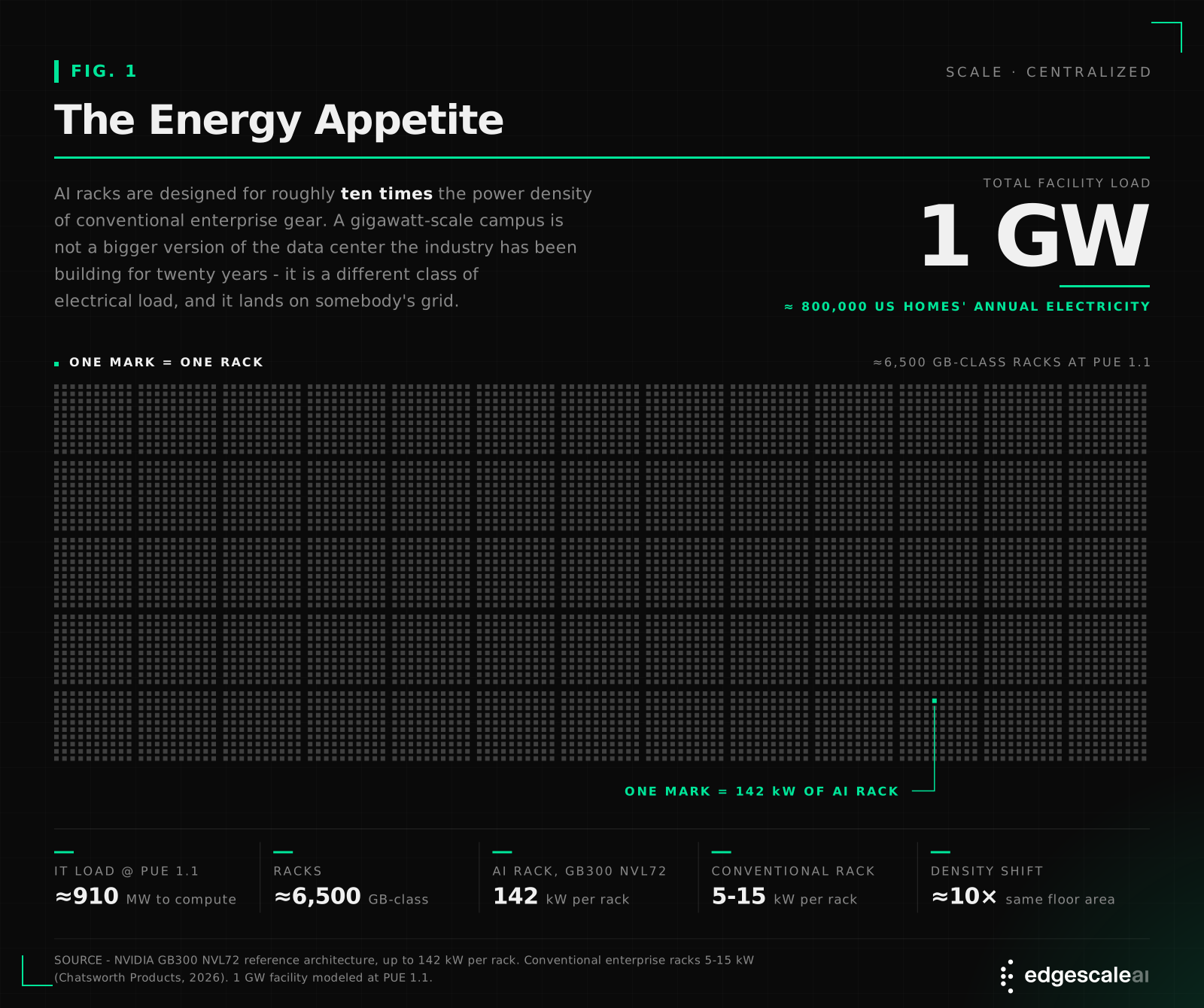
A gigawatt-scale AI campus is not a larger version of the data center the industry has been building for twenty years; it is a different class of electrical load. AI racks run at roughly ten times the power density of conventional enterprise gear — 142 kW for a GB300 NVL72 against the 5 to 15 kW of the racks beside it — and that load lands on somebody’s grid.
The compute is not the product
A data center does not make anything. It is a place where a decision gets computed, and once computed, the decision must travel to wherever the work is actually happening.
Imagine a factory seeking process optimization on the other end of that gigawatt. Every inference the plant needs becomes a journey: off the floor, through the firewall, across a carrier network the operator does not own, into a shared facility several hundred miles away, and back again — all before the answer is worth anything.
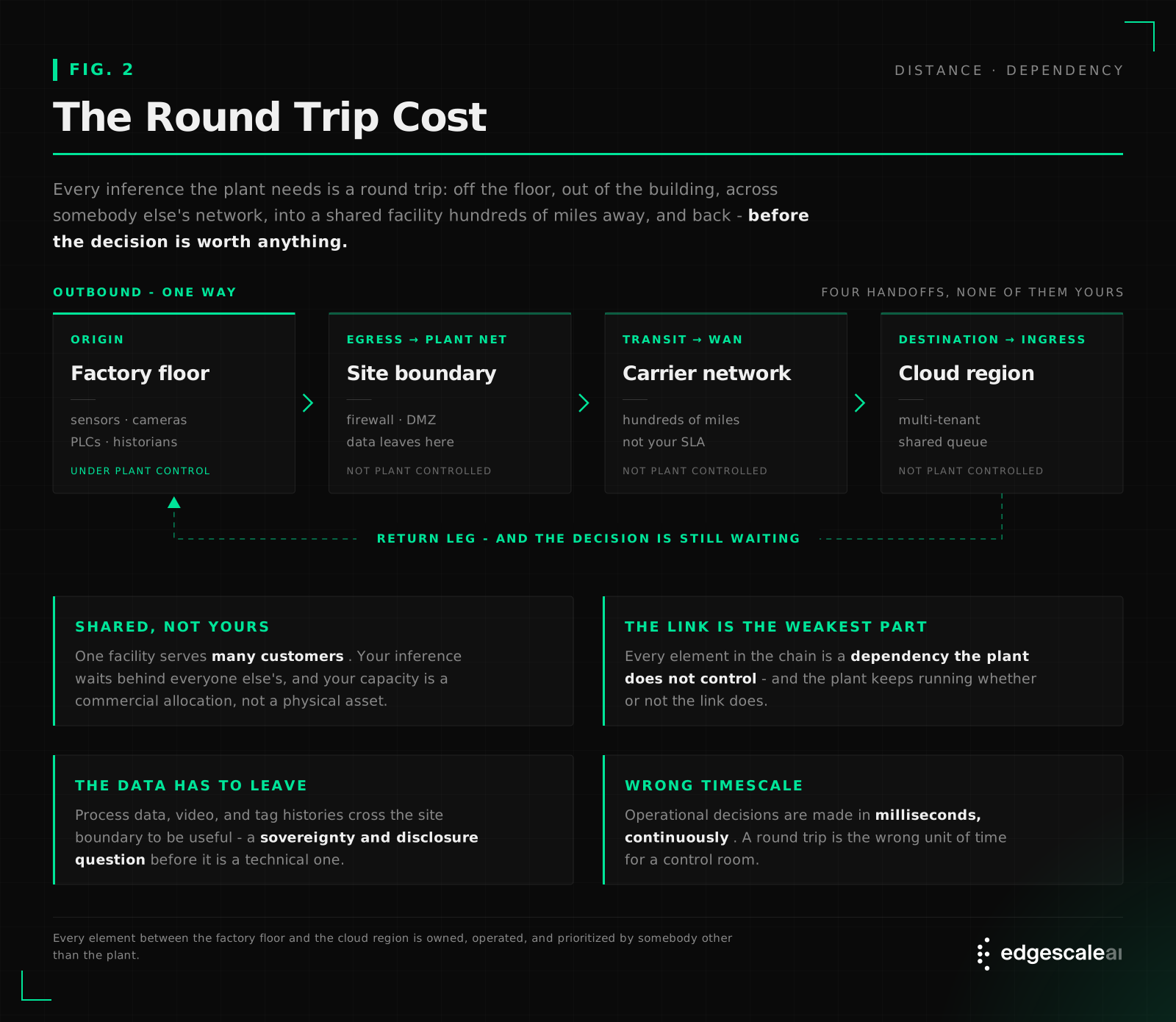
Each hop is a dependency the operator does not control, and the plant keeps running whether or not the link does. Capacity in a multi-tenant facility is a commercial allocation, not a physical asset; your inference waits behind everyone else’s. And operational decisions are made in milliseconds, continuously, which is simply the wrong unit of time for a round trip.
But the objection that actually kills these projects is none of those. It is that the data has to leave.
The risk we decided to get comfortable with
Process histories, tag data, video from the floor, setpoints, yields, failure signatures. For a model to be useful, an operator’s most sensitive record of how it actually runs has to cross the site boundary.
The industry’s response to this has been remarkably consistent: get comfortable with it. Encrypt in transit and at rest. Tokenize. Sign the data processing agreement. Collect the certification. Document the residual risk, accept it, and move on. That is a legitimate engineering answer, and for a great many workloads, it’s fine.
But notice what happened. We treated the exposure as fixed and went to work on our tolerance for it.
There is another obvious alternative, and it is to not send the data in the first place.
A one-in-a-million shot is the name for the bet you don’t take. In this case it’s the lower-risk alternative.
One kilowatt
A physical AI appliance sitting on the factory floor draws a kilowatt at peak and about five hundred watts on average. Against a gigawatt campus, that is one one-millionth of the load. It runs quantized 7B–70B models locally, holds 300,000 live tags, takes up to a hundred camera streams, and returns a first token in under 150 milliseconds — inside the building, on the operator’s own network, under the operator’s own control.
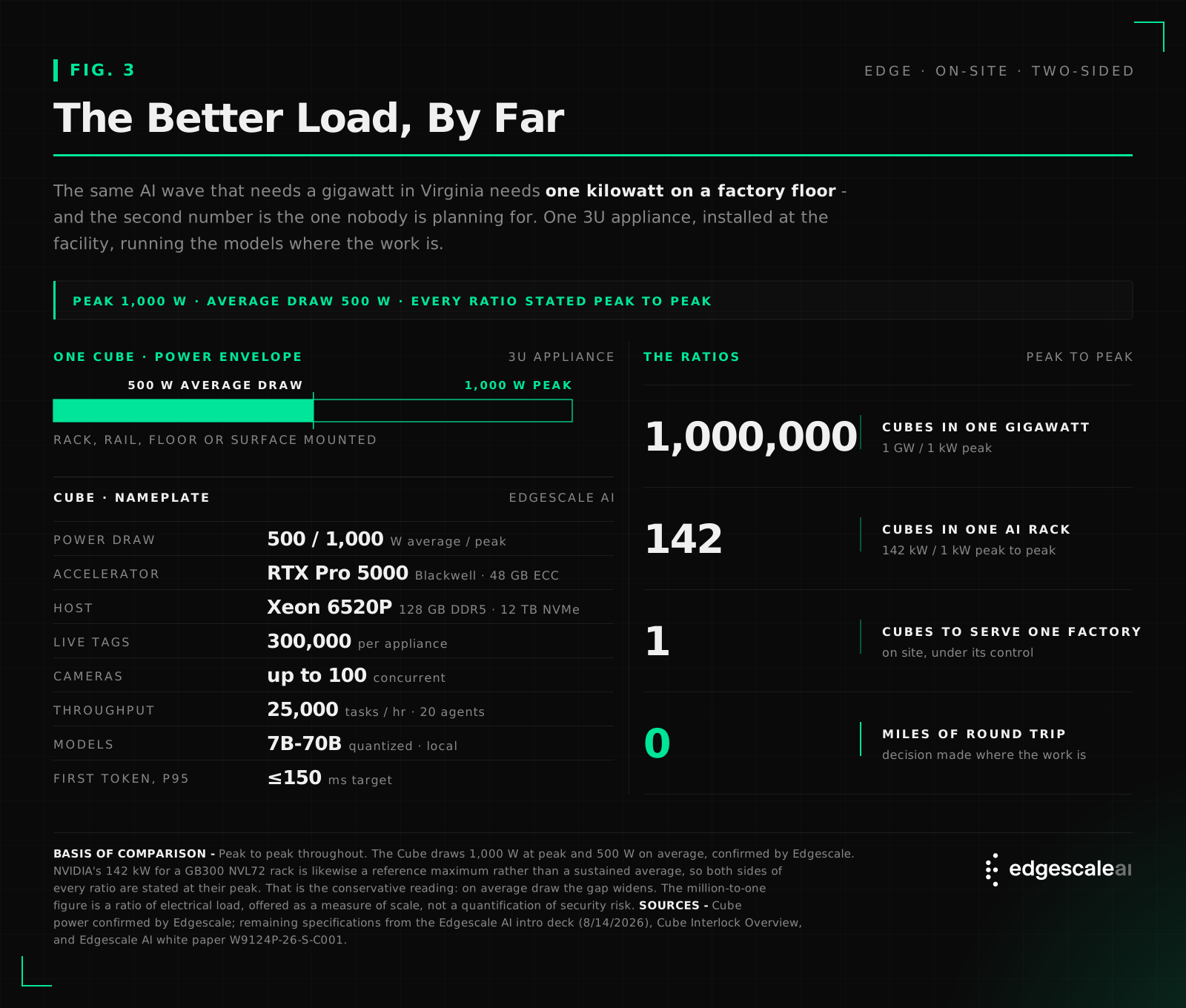
The centralized path asks an operator to accept a permanent structural exposure — its data outside its own perimeter, forever — in exchange for compute it could have hosted itself. The on-site path asks it to accept a piece of hardware in a rack it owns. One of those is an external risk you manage for twenty years. The other you can walk over and put your hand on.
The half that needs the planning in energy OT
This is more than a procurement preference. The AI phenomenon is two-sided in the energy domain, and only one side is being planned for — the load. More campuses, more generation, more transmission, more interconnection studies. Visible, contested, thoroughly modeled.
The second side is the operations of the source itself. Every one of those megawatts has to be produced, switched, moved and delivered by operational technology that now has to be faster, smarter and more autonomous than it has ever been: substations, compressor stations, generating plants, and grid-edge assets that were never designed for any of this. Serving the load requires the OT to get better. Getting the OT better requires AI at the asset. And AI at the asset is measured in kilowatts.
The gigawatt is the visible half. The kilowatt is the embedded half — the one that optimizes the operations keeping the visible half running.
The sure thing
Bringing physical AI infrastructure to energy — utilities, oil and gas — right now inverts the usual odds. The enormous, capital-intensive, politically contested datacenter build is treated as the sure thing, and the small local one as the speculation.
But that’s backwards. One path requires new generation, new transmission, years in a queue, a tolerance for your data living somewhere else, and a standing bet that the round-trip link holds. The other requires 3U of rack space and a power outlet, and if it fails, it fails in one building rather than across a portfolio.
Not every workload belongs at the edge, and training the models certainly does not. But for the work that happens where the work happens — the plant floor, the substation, the pad, the ship — the one-millionth-scale option is not the long shot on the table. It is the only part of this that is a sure thing.